Ten plain questions to ask before you sign, so you buy what your cafe really needs.
A fair warning first. We sell a POS, so we are not neutral. We wrote this guide so the questions work for any supplier, including us. Our own answers are kept apart, at the end, so you can compare.
Sound familiar?
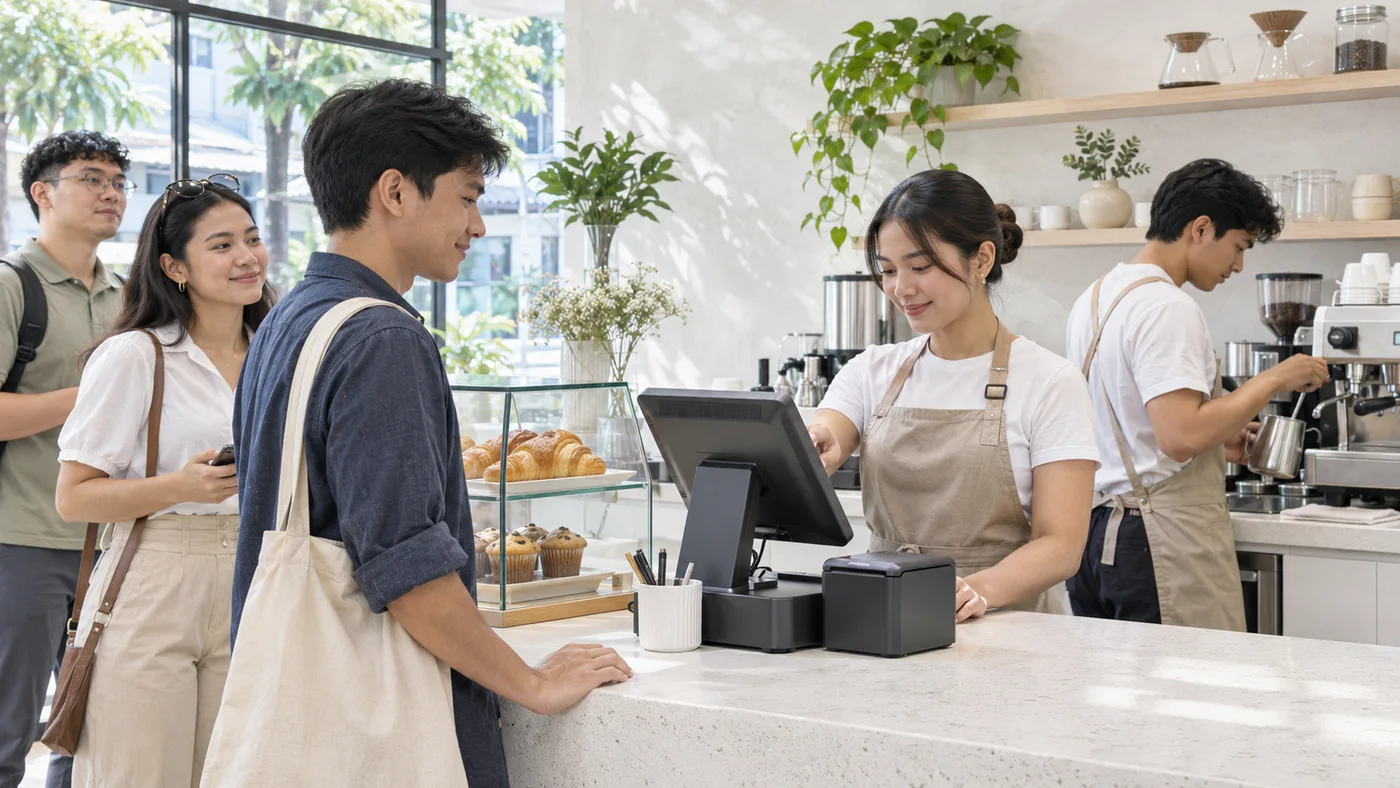
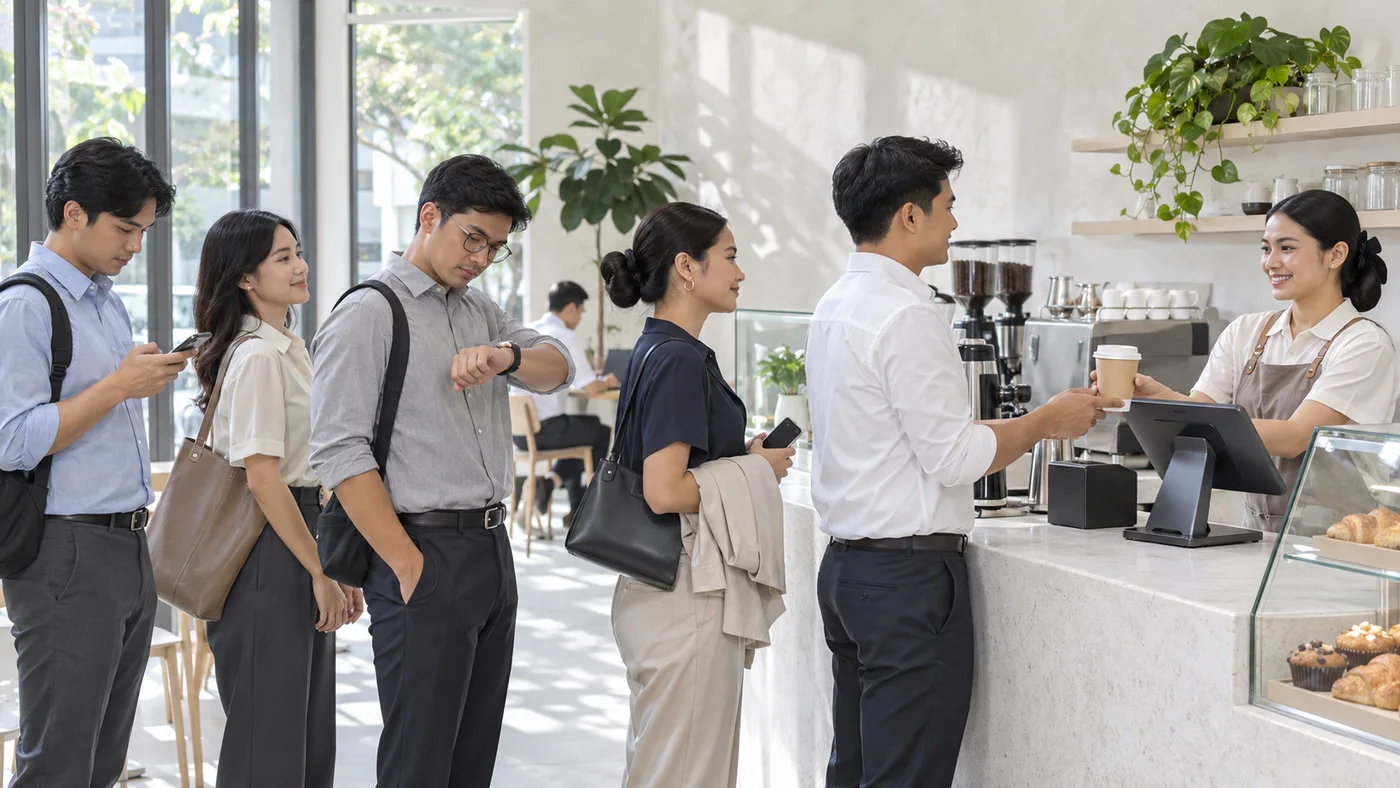
The morning line is so long that people walk away.
Staff take orders when they should be making drinks.
A drink is made wrong, made twice, or never made.
You run out of milk or beans in the middle of the rush.
Regulars lose their paper stamp cards.
Tables are full of laptops, but sales are low.
Beans, milk and cups eat up the profit.
You are not sure where the cash and the free drinks go.
A good POS helps with every one of these. The ten questions below show you how to check.
1
Start with who will use it, not with features.
Every supplier will show you the cashier screen first. But taking orders and payments is only a small part of what a POS does, and only your cashier uses that part. Most of it is behind the screen: sales reports, stock, cost per cup, cash checks and approvals. That part is for you, the owner, and it is where you save or lose money.
WhoWhat they need
CashierRing up a drink with all its changes in a few taps.
BaristaSee every drink, in order, with the changes clear.
CustomerKnow when the drink is ready, without asking.
Shift leadApprove cancelled items and discounts, count cash, check stock.
Owner and accountantSales, cost per cup, cash shortages and BIR reports, per branch.
Before the demo, write down how your busiest hour really goes: how long the line gets, which drinks people order, how the barista gets the order, and what goes wrong.
Bring to the demo: your menu with all its sizes and add-ons, your busiest hour, and the three things that go wrong most often. Then ask them to spend most of the demo on the owner's side, not the cashier screen.
2
Is it BIR accredited, and will it stay that way?
A POS that issues receipts needs two things from BIR. The supplier's software must be BIR accredited, and each of your POS terminals must be registered with BIR (a Permit to Use) before you use it. Without these, you can be fined, and BIR can close a store. The POS must also print the right receipts and the daily sales reports BIR asks for (called X and Z readings), and compute discounts the way BIR expects.
BIR rules also change. New rules on electronic receipts and sending sales to BIR online are being rolled out, and which ones apply depends on your type of business. Ask your accountant which apply to you, then ask the supplier how the POS handles them.
Ask the supplier:
Is your POS BIR accredited under the current rules, and can I see the papers?
Will you get the Permit to Use for each of my POS terminals?
When BIR changes the rules, who updates the POS, and do I pay extra for it?
Which recent BIR rule did you update for, and how long did it take?
Show me a Senior Citizen discount on one drink in a group order.
3
Will it keep up with the morning rush?
A coffee shop makes much of its money in a few busy hours, when office workers want their coffee before 9. Every extra tap on every drink makes the line longer, and people in a hurry leave. A large iced latte with oat milk, an extra shot and less sugar should take seconds to ring up, not a hunt through screens.
The internet will also drop, usually at the worst time. Even then, your POS terminals and the barista's screen still need your store's own network (the router and cables in the store) to talk to each other.
Try this at the demo:
Time a real order: three drinks, each with a size, a milk, an extra shot or a sugar level.
Ask if a regular's usual drink can be repeated in one tap.
Unplug the internet, then make a sale, print the receipt and send the drink to the barista.
Ask which payments and ways of ordering still work without internet. QR payments and online orders usually need it.
4
Does the barista see every drink?
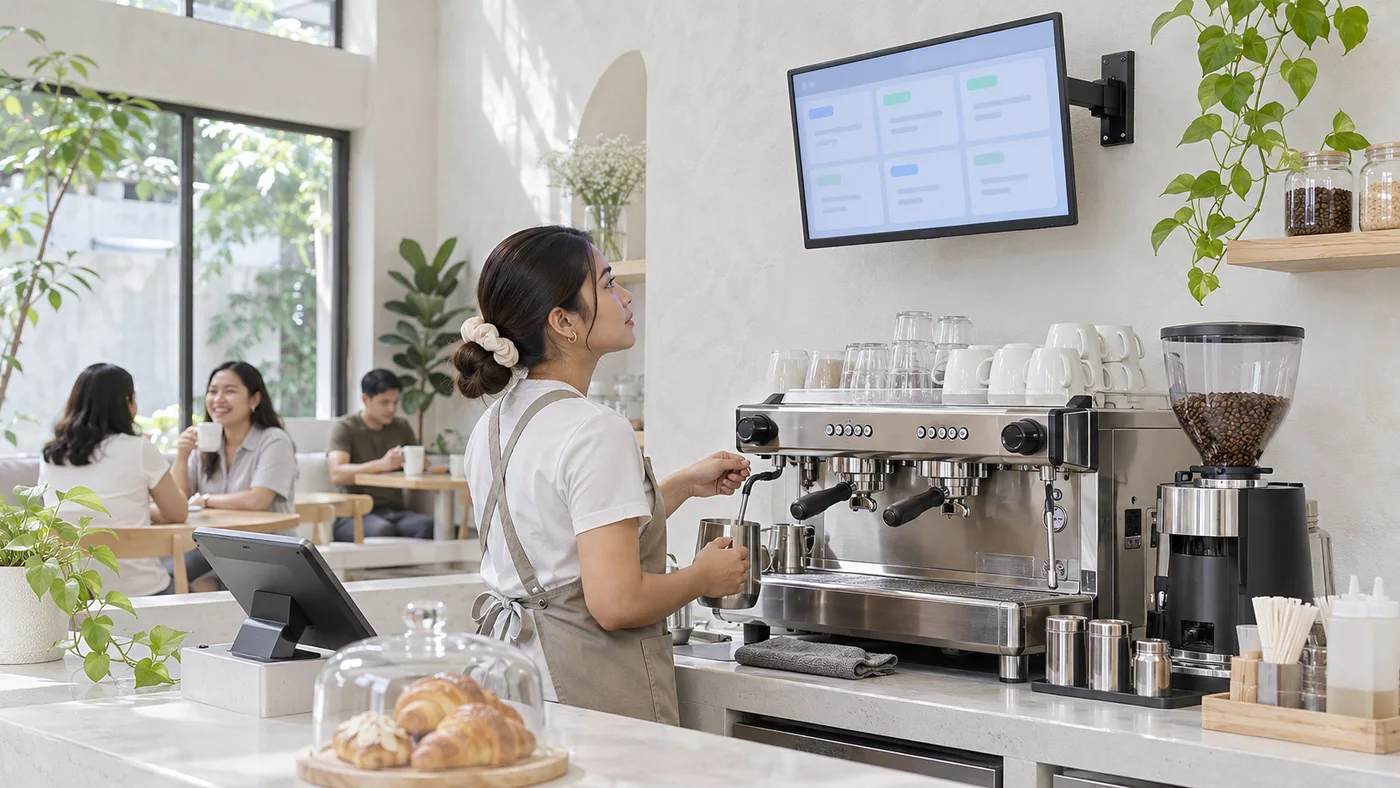
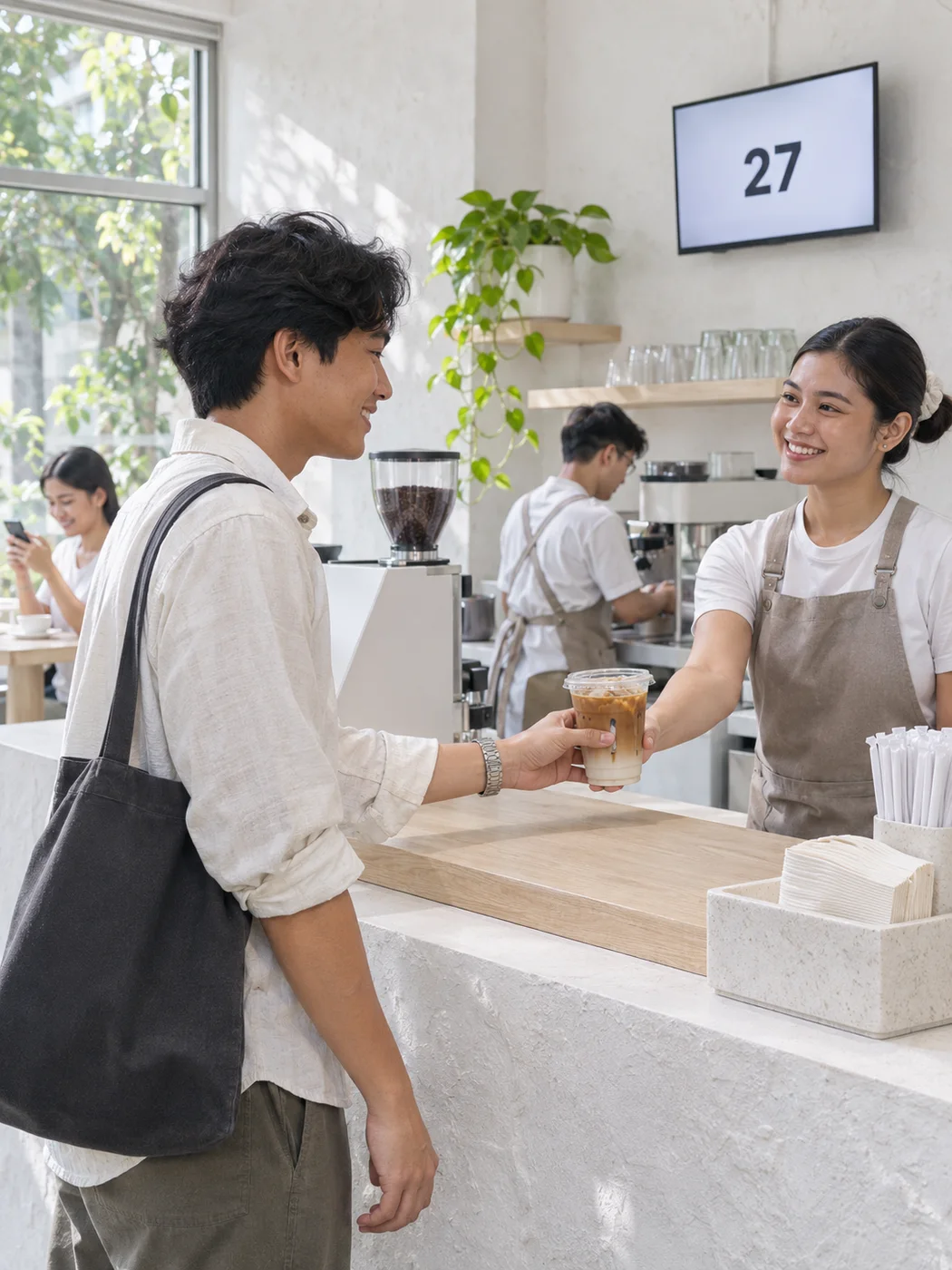
Handwritten cups and shouted orders work on a slow day. On a busy one, drinks get missed, made twice or made wrong, and the wrong name gets called. A screen at the bar shows every drink the moment it is ordered, with its changes, in the right order. A screen facing the customers can show the number that is ready, so nobody has to ask.
Ask the supplier: show me one order from the counter, one from a kiosk and one ordered ahead on a phone, all arriving on the same bar screen. How does the customer know the drink is ready?
5
How will customers order?
This choice changes your line and your staffing more than anything else. Pick what fits your cafe. You do not need all of them.
Way to orderBest for
At the counterSmall cafes with one cashier and a short line.
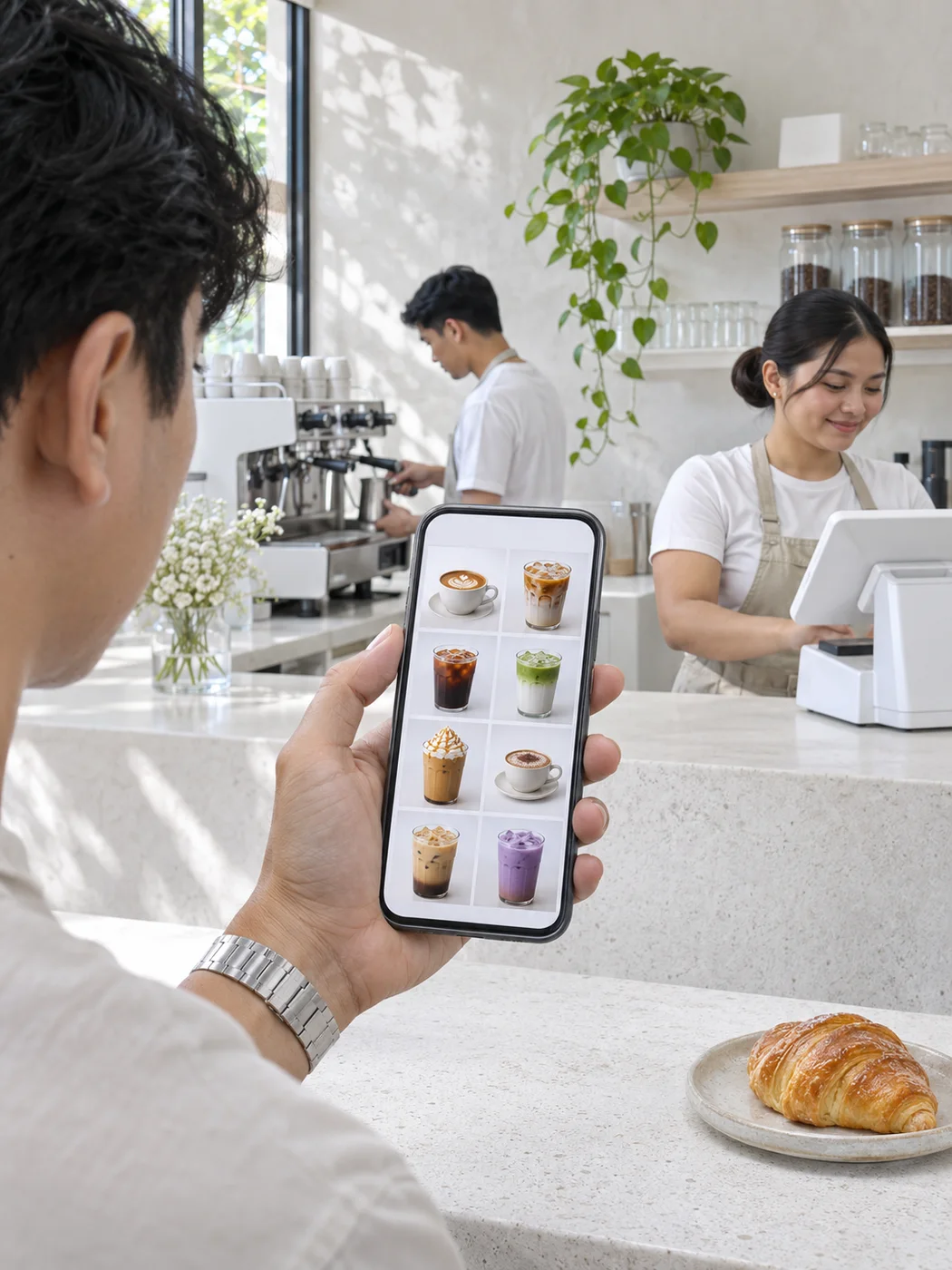
Order ahead on the phoneOffice workers who pick up on the way in, and skip the line.
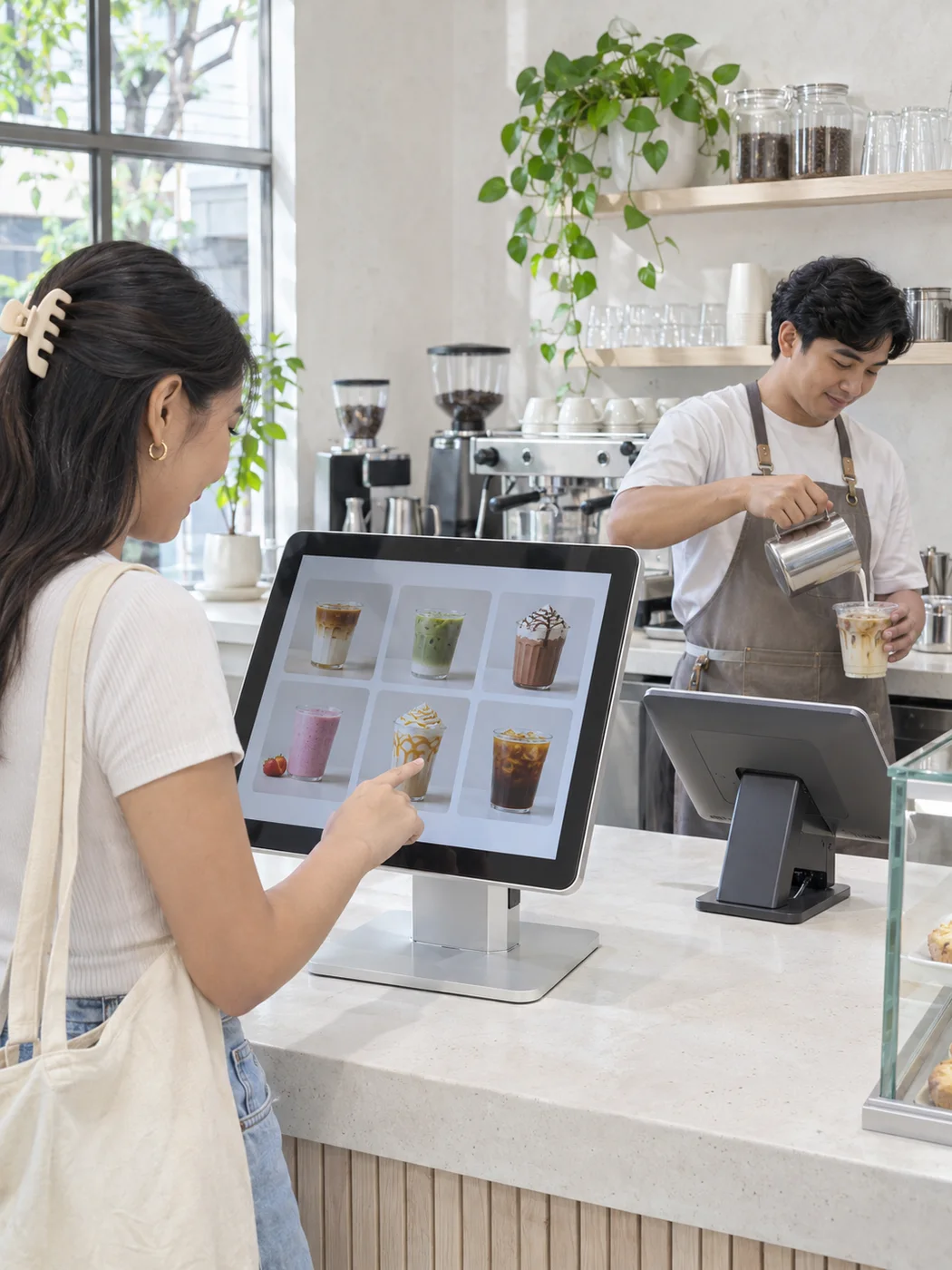
Touch screen beside the POSSmall cafes where staff should be making drinks, not taking orders. Customers order and pay on a screen facing them, run by the same POS terminal.
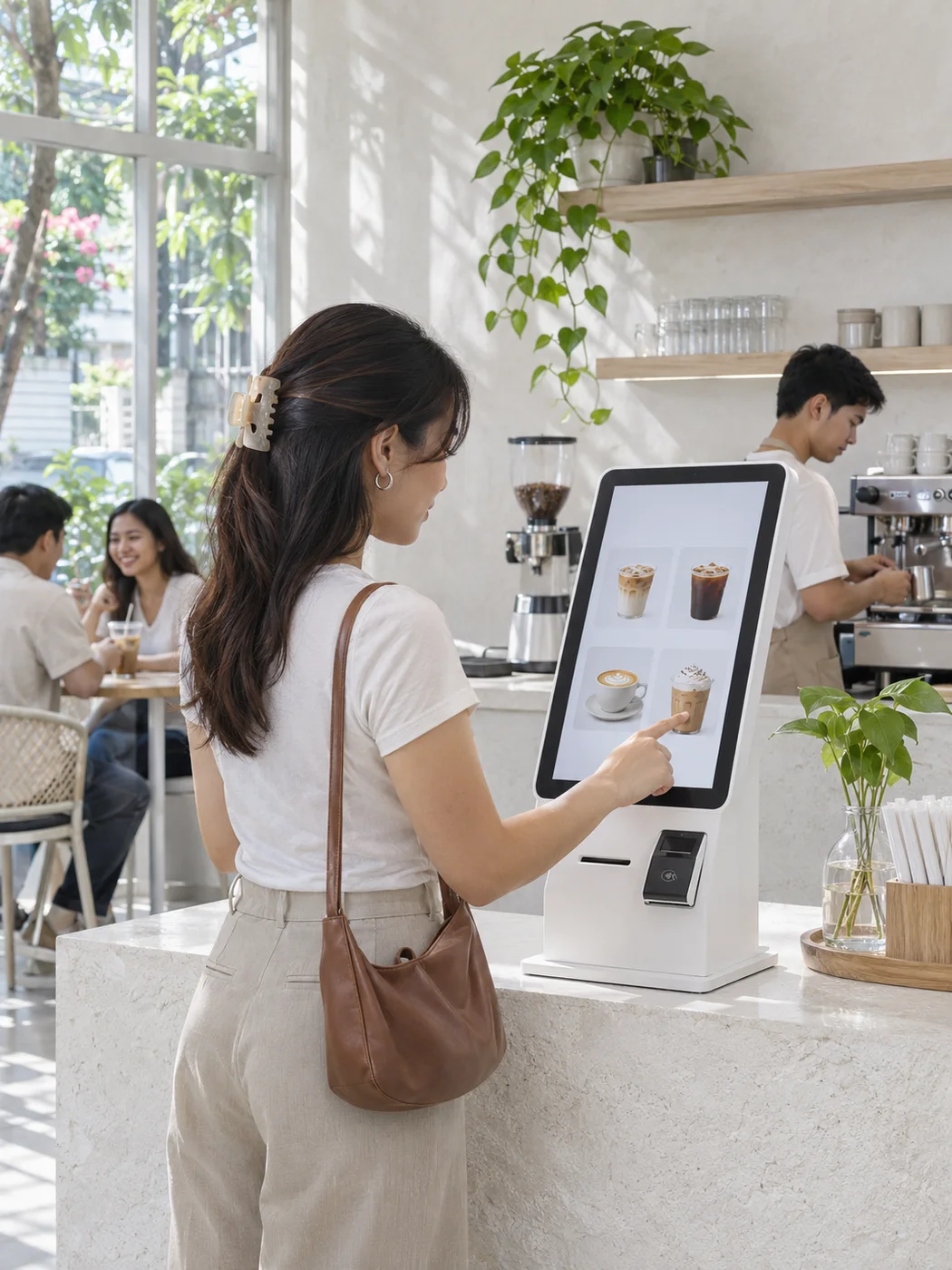
Self-service kioskBusy cafes where the counter line is the problem.
QR code on the tableCafes where people sit long and order a second drink or a snack.
Touch screenOrder aheadKiosk
Ask the supplier:
Can my POS terminal run a touch screen for customers, or do I need a separate kiosk machine?
Do the screen, kiosk and phone offer the same sizes and add-ons as the counter?
If I start with the counter only, can I add the rest later without changing systems?
6
Will your regulars come back?
A coffee shop lives on regulars. A paper stamp card gets lost, faked or forgotten, and it tells you nothing about who your best customers are. A digital stamp card does the same job, like "buy nine, get the tenth free", but the stamps are added by the POS with every purchase and saved to the customer's membership. Nothing to lose, nothing to fake, it works at every branch, and it shows you who stopped coming.
Many cafes also give free WiFi. If anyone can use it all day, a few tables fill up with people who bought one drink in the morning.
Ask the supplier:
Can I run a digital stamp card, like "buy nine, get the tenth free"?
How does a customer join, and how long does it take at the counter?
Can I see my regulars, and who has not come back in a month?
Can the WiFi code come with the receipt, so only paying customers use it?
7
Do you know what each cup costs, and when you will run out?
Many cafes sell well and still lose money. Beans, milk, syrups, cups and lids add up, and a heavy hand on the milk or a lot of spilled drinks can wipe out the profit. A good POS takes the ingredients out of stock every time a drink is sold, so you can compare what you used with what you should have used.
Running out is just as costly. No milk or no beans at 8 in the morning means lost sales and unhappy regulars. And if the kiosk or the phone still sells a drink you can no longer make, someone has to go back to the customer and refund it.
Ask the supplier:
If I sell 100 large lattes, does the system take the beans, milk, cup and lid out of my stock, and add the oat milk when the customer asks for it?
Can I count stock and see the difference?
Will it warn me before milk or beans run out?
Can I mark a drink or pastry sold out, so the kiosk and the phone stop selling it?
8
How do customers pay?
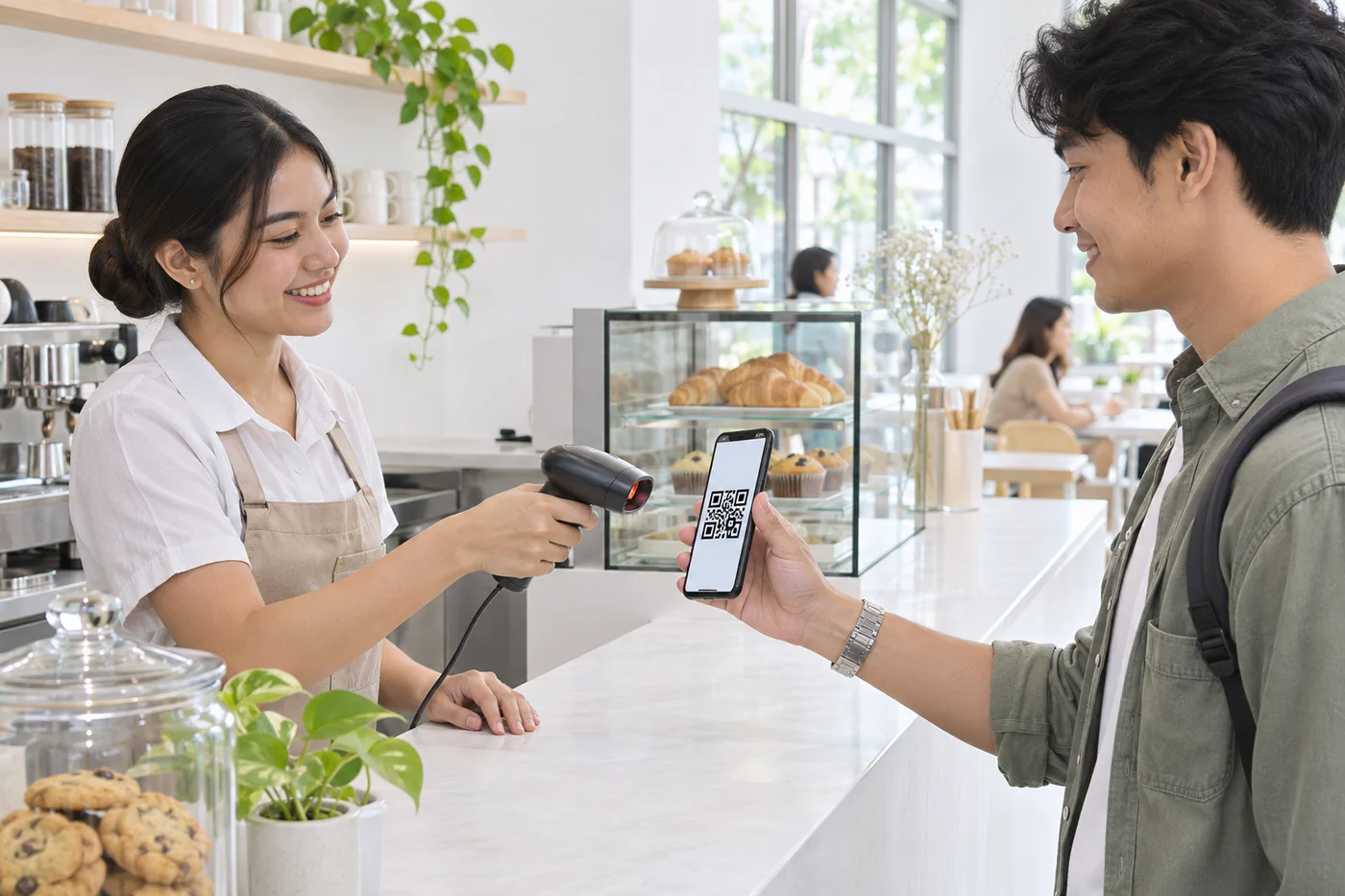
Customers pay with cash, cards, GCash, Maya and bank apps. Two problems are common: a fake payment screenshot, and a card amount typed wrong into the card terminal. In the morning rush, a slow payment holds up the whole line.
Ask the supplier: does the POS confirm the QR payment by itself, or does my cashier look at the customer's phone? Is the card terminal connected, or do we type the amount twice?
9
Will it catch irregularities when you are not there?
This is most owners' biggest fear. In a cafe, money leaves quietly: free drinks for friends, a drink cancelled after the customer paid, a discount nobody asked for, cash that comes up short, milk and beans that run out too fast.
A good POS records who did what and when, asks a shift lead to approve the risky actions, and points out the unusual ones. You should see them from your phone, not at the end of the month.
Ask the supplier:
Can I see every cancelled item, discount and free drink, with the name of the staff and the time?
Does it need a shift lead's approval, and will I get a notice on my phone?
Does it point out the unusual ones, or do I have to read every report?
Does it compare the beans and milk I used with the drinks I sold?
10
Who helps you when it stops?
A POS problem at 7:30 in the morning, with a line out the door, costs real money. Find out who answers, how fast, and whether they know your setup.
Ask the supplier:
Who do I call, and do I talk to a person?
Are they open early in the morning and on weekends, when cafes are busiest?
Is support local, and can someone come to the store?
How many hours of training do my staff get, and can new staff be trained later?
✓
Are you choosing a partner, or just buying software?
A POS is not a one-time purchase. You will use it every day for years, through BIR rule changes, new branches, new staff and broken printers. So you are choosing the company as much as the software. Ask yourself: will they still be here, and still improving it, five years from now?
Be careful with big claims. They are easy to say and hard to check.
They sayAsk them
"We are the best."Best at what, and for whom? Has anyone tested every POS out there to say so? Ask them to show you, on your own menu.
"We are the cheapest."Cheapest compared to what? Some POS software is even free. Ask for the first-year and renewal cost, and what costs extra later: support, updates, BIR changes, more POS terminals.
"We are the most trusted."Trusted by whom? Was there a survey? Ask for real customers you can call instead.
Ask the supplier:
How long have you been making POS, and do you build it yourselves or resell someone else's?
How many stores use it today, and which ones can I visit?
When was your last update, and what did it change?
When my business grows, more branches, a kiosk, online orders, can I stay on the same system?
✓
What will it cost in total, and can you leave?
A low monthly price can hide extra charges. Add up everything for the first year before you compare: software per POS terminal, hardware, receipt printers, the bar screen, add-ons like loyalty or a kiosk, setup and training.
If you are in a mall, also ask if the POS can send your daily sales to the mall, and if the mall allows that supplier. Check with the mall's tenant office before you sign.
Also ask what happens if you leave. Your sales history belongs to you. You may need it for BIR, for the bank, or when you sell the business.
Ask the supplier: give me the full first-year cost in writing, item by item. If I stop, do I keep my data, in what format (for example Excel), and how fast do I get it?
See it in a real cafe.
A demo shows the best case. A cafe like yours that already uses the POS shows the real one.
Ask the supplier for two cafes you can visit or call, ideally your size and type.
Go during the morning rush and watch the cashier and the barista.
Ask the owner what broke in the last three months, and how fast it was fixed.
Ask what they would choose differently if they started again.
The short checklist
A demo of the owner's side, not just the cashier screen
BIR accredited, with papers to show, and kept up to date when the rules change
Fast drinks with add-ons at rush hour, and keeps selling without internet
Every drink on the barista's screen, and customers see when it is ready
The ways of ordering that fit your cafe, like a touch screen so staff can focus on drinks, and room to add more
A digital stamp card for your regulars, and WiFi only for paying customers
Recipes and stock, so you know what each cup costs and what is running low
QR and card payments confirmed by the POS
Who cancelled, discounted or gave away drinks, with the unusual ones pointed out on your phone
A local team that answers early, and real training
A long-term partner with a track record you can check, not just big claims
The full first-year cost in writing, and your data stays yours
BIR accredited. It prints BIR receipts, daily X and Z readings and BIR reports, and handles Senior Citizen, PWD, Solo Parent and Medal of Valor discounts. Our own team builds the system and updates it when BIR rules change. As a policy, BIR updates are free on your plan. For example, the BIR clarified withholding tax on invoices in October 2026, and we added support in November. For BIR electronic invoicing, our accreditation as a provider (ESP) is still pending.
Drinks have add-ons like size, milk and extra shots on the same screen. Each POS terminal saves the sale on the terminal itself, so a slow or dropped internet does not hold up the cashier. Everything goes to your online back office when the connection is back. QR payments and online orders need the internet.
The Kitchen Display software works as the bar screen, and the Customer Display shows now serving numbers for pickup. Both come with every POS plan, within its device allowance: POS Starter connects one kitchen display, customer display or printer, and POS Enterprise up to three, in any mix. The screens themselves are hardware you buy.
Click & Collect lets customers order ahead and get a ready alert. Our Self-Service Screen adds a big touch screen to your K2 POS terminal, so customers order on their own while your staff make drinks. No separate kiosk machine is needed, and the screens are available now. A kiosk also cuts the counter line, and Web QR ordering is included with POS Enterprise. All of them use the same menu, add-ons and bar screen.
Our Loyalty Program has digital stamps, points, tiers and gift certificates. Members sign up with a QR code, and it works at any branch, with member reports. Smart WiFi prints a WiFi code on the receipt that lasts for the minutes you set.
Maya QR payments use QR Ph, the national QR code, so most e-wallets and bank apps work, and the payment is confirmed on the POS (Maya fees apply). Card terminals get the amount from the POS.
The EA Owner's App is free with every POS plan. It tells you about cancelled items and discounts, lets you approve them, and shows sales per branch. AI Integration, an add-on, flags signs of theft, odd voids and costly errors for you to review, and our stock loss reports show where your stock is going.
Support by our own staff, backed by the developers who build the system, in Metro Manila, Metro Cebu and Metro Davao. Training is 4 hours on POS Starter and 8 hours on POS Enterprise.
We are a complete solution with a track record you can check. We have built POS for 26 years, in Cebu, and we build it ourselves. We shipped 1,830 improvements in 2026 up to November 18, see recent updates on our What's new page. The same system grows from one cafe to many branches, kiosks and online orders. Ask us for stores like yours to visit.
One plan for each POS terminal, paid monthly or one time, plus only the products you need. Browse our software catalog and hardware catalog, and ask us for an itemized quote. Our mall integrations send daily sales to SM, Ayala, Robinsons and Megaworld malls. Your data is yours, with up to 20 years of sales history, and it comes with you if you leave.
Ask us the ten questions.
Bring your menu. We'll ring up your own drinks with all their add-ons, and unplug the internet if you like.